
Laser: Hair Removal & Fractional
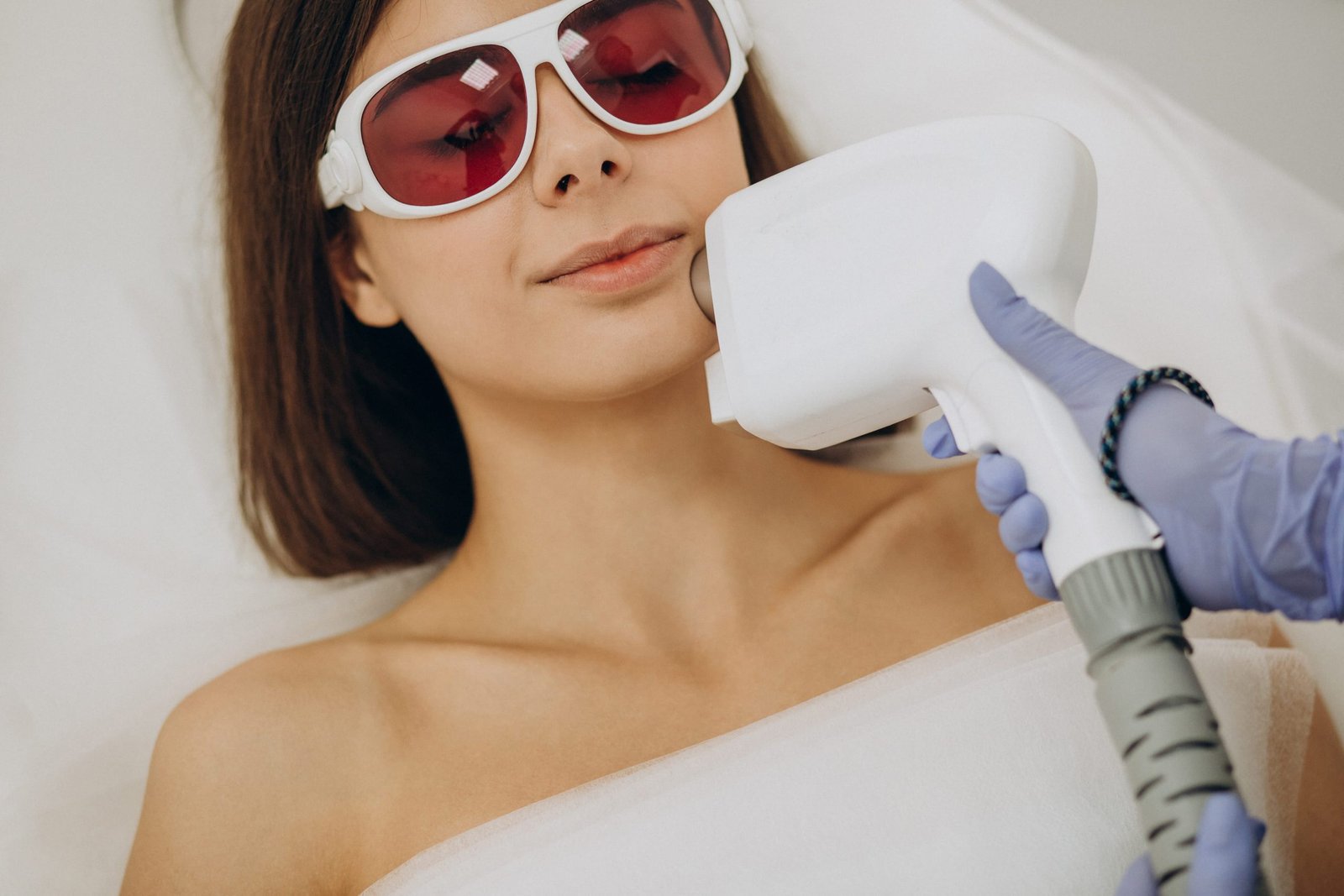
Medically Supervised, Not Technician-Led
A laser session isn’t a button press. It’s a setup built from your skin type, your hair thickness, the device’s fluence, and the pulse duration. The difference between those settings is the difference between an excellent result and a permanent burn.
What laser services are available at Sira Clinics in Madinaty?
The laser department at Sira Clinics provides laser hair removal for all body and facial areas across a wide range of skin types including darker skin, and fractional laser for acne scarring, surgical and traumatic scars, enlarged pores, stretch marks, and skin resurfacing. All sessions are performed under dermatologist supervision, preceded by skin typing and a small-area test patch.
The 3 Topics Our Visitors Search Most
1. How many laser sessions do I need for permanent hair removal?
The honest answer: 6 to 10 sessions on average, followed by spaced maintenance sessions.
Why isn’t one session enough? Because laser only affects the follicle during its active growth phase (anagen), and at any given moment no more than 20–30% of the hair in an area is in that phase. Sequential sessions at calculated intervals are what catch the remaining follicles as they cycle.
Intervals: every 4 to 6 weeks for the face, every 6 to 8 weeks for the body. Shortening the interval doesn’t speed up the outcome — it wastes a session on dormant follicles.
What changes the session count?
- Hair colour: coarse dark hair responds best. Very light blonde, white, and red hair does not respond to laser because it lacks sufficient melanin.
- Area: coarse hair (underarms, bikini) responds faster than fine hair (face, arms).
- Hormones: PCOS and thyroid dysfunction drive regrowth and require more maintenance. That’s why we sometimes request hormonal testing before starting — treating the cause saves you both sessions and money.
Be careful with the word “permanent”: the accurate scientific term is permanent hair reduction — an 80–90% decrease in hair density, thickness, and colour. Claims of total, forever disappearance are not scientifically accurate.
Before your session: shave the area with a razor the day before (no plucking, waxing, or home laser for four weeks prior), avoid direct sun exposure, and tell your doctor about any medication you’re taking — particularly antibiotics and retinoids, some of which increase photosensitivity.
2. Is laser safe for darker skin? And which device is right for you?
Yes — provided the correct device and settings are chosen. The burns and pigmentation you hear about are not a flaw in laser technology; they’re the result of a device or setting mismatched to the skin type.
How does laser work? It targets melanin inside the hair follicle and converts light into heat that damages the follicle. The complication is that your skin contains melanin too — and the darker the skin, the greater the chance the skin itself absorbs the energy instead of the follicle. This is exactly where device selection matters.
Common device types:
- Diode (810nm): the most widely used and the most balanced. Good penetration depth, suits a broad range of skin types, and integrated cooling makes it relatively comfortable.
- Alexandrite (755nm): fast and highly effective on lighter skin and fine hair, but higher risk on darker skin.
- Nd:YAG (1064nm): the longest wavelength and the safest option for dark and very dark skin, because it bypasses superficial skin pigment.
- IPL devices: not strictly laser but broad-spectrum intense pulsed light. Less precise and less consistent in outcome.
What we do at Sira Clinics: we classify your skin on the Fitzpatrick scale (type I to VI), select the device and settings accordingly, and run a small test patch before the full session. These steps are never skipped, however busy the day.
Red flags at any laser center: nobody asks about your skin type or medications, no test patch is performed, everyone receives the same settings, and the session is run by a technician with no medical supervision.
3. Fractional laser for acne scarring — how it works and how many sessions
The concept, simply: instead of treating the entire skin surface at once, the device splits the beam into thousands of microscopic columns that penetrate the skin, leaving untreated tissue in between. Those untreated islands are what accelerate healing — so you get powerful collagen stimulation with far shorter downtime than fully ablative laser.
What does fractional laser treat?
- Atrophic acne scars, and post-surgical and burn scarring
- Enlarged pores and rough skin texture
- Fine lines and mild skin laxity
- Relatively recent stretch marks
- Certain types of pigmentation and melasma — within a carefully designed protocol
Number of sessions: typically 4 to 6 sessions at 4 to 6-week intervals. Improvement is cumulative, and collagen production continues for up to six months after the final session — so the result shouldn’t be judged before then.
Downtime: redness resembling sunburn for two to four days, then mild roughness and flaking until around day seven. Most patients return to work within 2 to 3 days. Sun protection after treatment is not optional advice — it is a condition of success, and neglecting it is the leading cause of post-fractional pigmentation.
When fractional laser isn’t performed: during active inflammatory acne, active skin infection or herpes, within six months of isotretinoin use, in patients prone to keloid scarring, or during pregnancy.
A realistic expectation: fractional laser typically improves scar appearance by 50% to 80% across a complete series. It does not return the skin to its pre-acne state, and any promise otherwise is an exaggeration.
Why Choose Sira Clinics for Laser
- Sessions supervised by a doctor, not run by a lone technician. Settings are set and reviewed medically, because laser is a medical procedure, not a passing beauty service.
- Your skin type is documented in your record. Fitzpatrick type, per-session settings, and your response — recorded and retained, so you never start from zero.
- A test before the protocol. We don’t begin a full session until we’ve confirmed how your skin responds on a small area.
- Certified, routinely calibrated devices. An uncalibrated device delivers energy different from what the screen displays — and that is precisely what causes burns.
- Effective cooling and greater comfort. Integrated cooling systems make sessions tolerable without anaesthesia in most cases.
- Complete privacy for women. Private rooms, with fully female staffing available on request.
FAQs
Q: Is a laser session painful? A: It feels like a light elastic-band snap lasting a fraction of a second. Our devices’ cooling systems reduce this considerably. Sensitive areas such as the face and bikini line feel more, and a topical anaesthetic cream can be used beforehand if needed.
Q: Can laser be performed during pregnancy? A: No. We postpone laser sessions during pregnancy as a precaution, despite the absence of conclusive evidence of harm. Sessions can resume after delivery and breastfeeding.
Q: Does laser cause skin cancer? A: No. Hair removal lasers use wavelengths in the visible and near-infrared range and contain no ionizing radiation capable of damaging DNA. That is the fundamental difference between laser and X-rays.
Q: What do I do before and after a session? A: Before: shave the day before, no plucking or waxing for four weeks, avoid sun and tanning beds, and apply no perfume or deodorant to the area. After: cool compresses as needed, a gentle moisturizer, daily sunscreen, and avoid saunas, hot baths, and intense exercise for 24 to 48 hours.
Q: When will I see results? A: Within days of the first session you’ll notice treated hairs shedding (it may look like growth — it’s actually being pushed out). A genuine difference in density typically appears from the third session onward.
Q: Does fractional laser leave marks? A: With correct settings for your skin type and strict sun protection, it does not leave permanent marks. The most common complication is temporary pigmentation that resolves over weeks with topical treatment.Q: What does a session cost? A: It depends on the area and its size, the device used, and the number of sessions in the plan. We give you the complete protocol cost in writing before the first session.
Book a Consultation
Consult with one of our specialists about the topics discussed in this article.
📅 Book Now