
Audiology
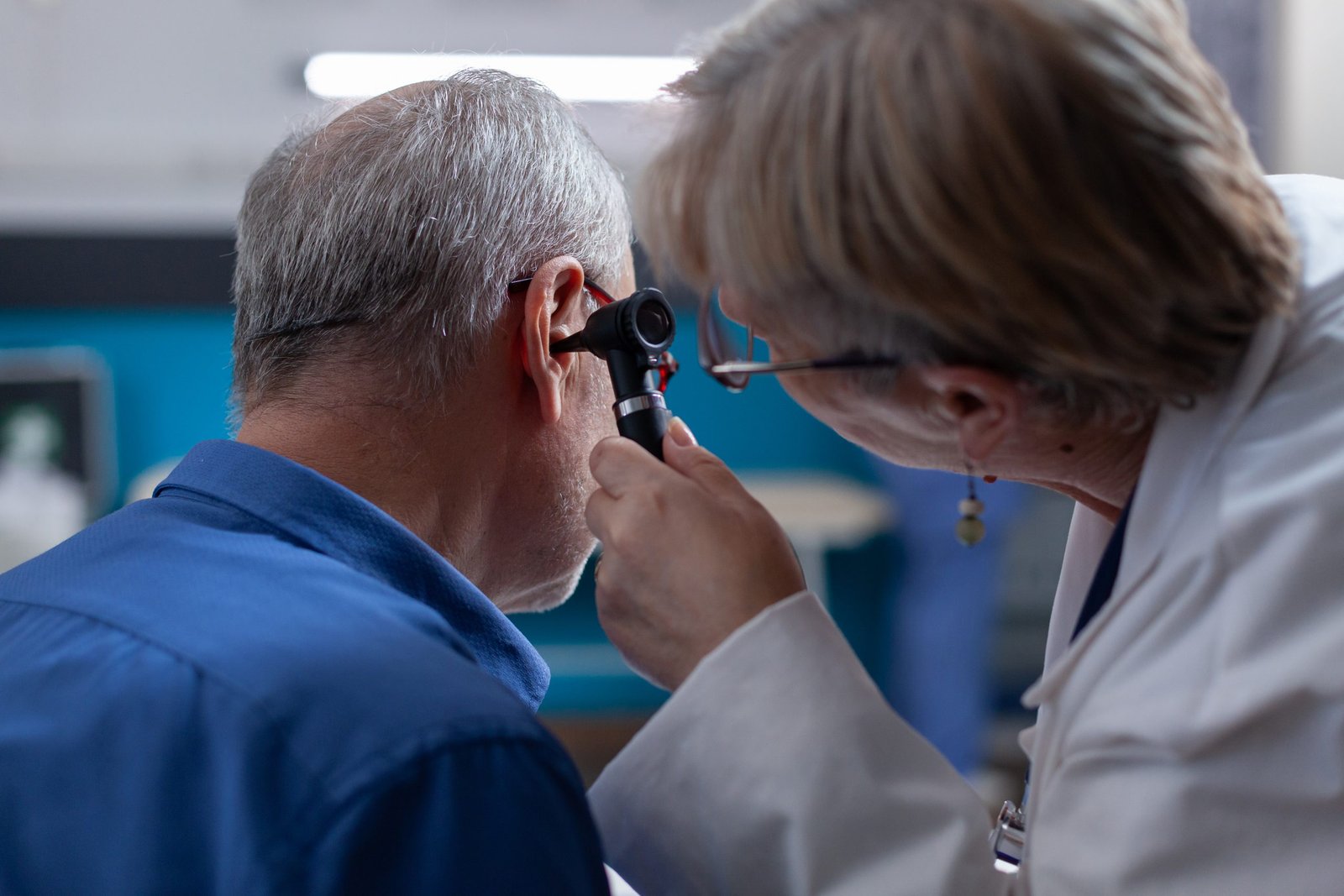
Because Hearing Is How You Stay Inside the Conversation
Hearing loss doesn’t only take sounds. It takes the joke at the family table, the phone call with your grandchild, and your confidence in a room full of people. We’re here to give them back.
- A soundproofed test booth and calibrated equipment
- Testing for every age — from newborns to the elderly
- Hearing aid fitting, programming, and long-term follow-up
The 3 Topics Our Visitors Search Most
1. Is my hearing failing? Seven signs not to ignore
Adult hearing loss creeps in so slowly that people typically wait 7 to 10 years before acting. Assess yourself honestly:
You ask people to repeat themselves often — or they tell you that you do.
You hear sounds but can’t distinguish words, especially in noise (a restaurant, a gathering, a market). This is among the clearest early signs.
Your household complains the television is too loud.
You particularly struggle to hear women’s and children’s higher-pitched voices.
You avoid gatherings and phone calls — and without noticing, you withdraw socially.
Persistent ringing in the ears.
Conversations exhaust you, because your brain is working overtime to fill in the gaps.
Why is delay costly? The ear captures sound, but the brain is what understands it. When auditory input is reduced for years, the brain’s speech-processing capacity weakens — which makes adapting to a hearing aid later slower and harder. Numerous studies have also linked untreated hearing loss to social isolation, depression, and accelerated cognitive decline in older adults.
When to get tested? At the appearance of any of the signs above, routinely after fifty, annually if you work in a noisy environment, or immediately in the event of sudden hearing loss in one ear — a medical emergency requiring intervention within days, as the chance of response drops sharply with time.
2. Hearing tests for children — and when is speech delay caused by hearing?
A rule every parent should know: a child who doesn’t hear well doesn’t speak well. Speech is learned by imitation, and there’s no imitation without hearing.
Newborn screening: every newborn should have a hearing screen within the first month. It’s done while the baby sleeps, is painless, and takes minutes. If you have a child who hasn’t been screened — at any age — do it now.
Signs warranting immediate testing, by age:
- Up to 3 months: doesn’t startle at sudden loud sounds.
- 6 months: doesn’t turn toward sound; doesn’t babble.
- 12 months: doesn’t respond to their name; no single intelligible word.
- 18 months: fewer than ten words.
- 24 months: doesn’t combine two words, or isn’t understood by those around them.
- At any age: loss of a speech skill they previously had — a sign warranting urgent assessment.
The tests we use for children:
- OAE (otoacoustic emissions): a quick, painless screen performed on infants while asleep.
- Tympanometry: measures middle ear pressure and detects fluid behind the eardrum — the most common cause of temporary hearing loss in children, and one that frequently passes without pain or obvious symptoms.
- ABR (auditory brainstem response): where cooperation isn’t possible or other results are in doubt.
- Play audiometry: from roughly two and a half years, turning the test into a game.
An important message for parents: don’t wait for them to “speak on their own.” The first three years are the golden window for language acquisition, and every month of delay in detecting hearing loss costs the child months of therapy later. Testing does no harm — waiting can.
3. Hearing aids — how to choose, and why do some people fail to adapt?
First: a hearing aid is not a sound amplifier. Devices sold without a hearing test amplify all sound equally — noise included — and can worsen the damage. A genuine hearing aid is programmed to your own audiogram, amplifying only the frequencies you’ve lost, suppressing noise, and bringing speech forward.
How we select yours:
A full hearing test identifying the type and degree of loss at each frequency.
Your lifestyle: someone mostly at home needs different specifications from someone in meetings, restaurants, and constant calls.
Dexterity and vision: an older adult who struggles with small buttons needs a larger design and easier batteries.
Style: behind-the-ear (BTE), in-the-canal (ITC/CIC), or receiver-in-canal (RIC). Each has advantages and limits — and smaller is not always better, particularly in severe loss.
Budget: we tell you candidly what each price tier actually adds, and which features you’ll never use.
Why do some people fail to adapt — and how we prevent it?
- Expecting “normal” hearing immediately. A hearing aid doesn’t restore the ear to what it was. It improves things considerably, but it doesn’t erase the loss.
- A brain that hasn’t heard in years. After years of relative silence, ordinary sounds (your footsteps, the fridge, a newspaper page) feel intrusive and loud. This is normal and temporary, and needs a gradually programmed adaptation period.
- Imprecise programming or no post-purchase adjustment.
- Giving up too early. The first two weeks are always the hardest.
Our commitment: we don’t sell you a device and wave goodbye. We program it to your audiogram, give you a staged adaptation period, re-adjust it at defined follow-up appointments, and stay with you until it becomes an unremarkable part of your day.
Why Choose Sira Clinics for Audiology
- A genuinely soundproofed test booth. Testing in an ordinary room produces inaccurate numbers on which a wrong decision gets built.
- Routinely calibrated equipment. An uncalibrated device means a wrong audiogram, which means an incorrectly programmed hearing aid.
- A complete pediatric protocol. A team trained to work with infants and children using age-appropriate methods — no fear, no force.
- Advice before sales. If your cause is fluid, impacted wax, or infection, we’ll tell you and treat it — we won’t sell you a device you don’t need.
- Follow-up after fitting. Adjustment, maintenance, and cleaning appointments plus periodic re-testing, because hearing changes over time and the aid must change with it.
- Integration with ENT and neurology inside Sira Clinics, because many tinnitus and dizziness cases need more than one specialty.
FAQs
Q: Is a hearing test painful? A: Not at all. The test is non-invasive and entirely painless, usually taking 20 to 40 minutes depending on which studies are required.
Q: From what age can a child’s hearing be tested? A: From the first days of life. We have tests designed for every developmental stage, some performed while the child sleeps.
Q: Can tinnitus be treated? A: Tinnitus is a symptom, not a disease, with many possible causes (hearing loss, wax, blood pressure, medications, jaw or neck problems). We start by identifying the cause, then build a plan that may include treating that cause, sound masking devices, retraining therapy, or a hearing aid where loss is present.
Q: Do hearing aids weaken your hearing over time? A: No. This is a widespread myth. A correctly programmed hearing aid keeps the auditory pathway in the brain stimulated. What’s genuinely harmful is leaving hearing loss untreated.
Q: How long does a hearing aid last? A: Typically 4 to 6 years with proper care and routine servicing.
Q: Which hearing aid is best? A: There is no universally “best” device. The best one is the one suited to your degree of loss, your lifestyle, and your ability to handle it. Your hearing test answers that question — not an advertisement.
Book a Consultation
Consult with one of our specialists about the topics discussed in this article.
📅 Book Now