
Plastic Surgery
A Big Decision Deserves an Honest Consultation
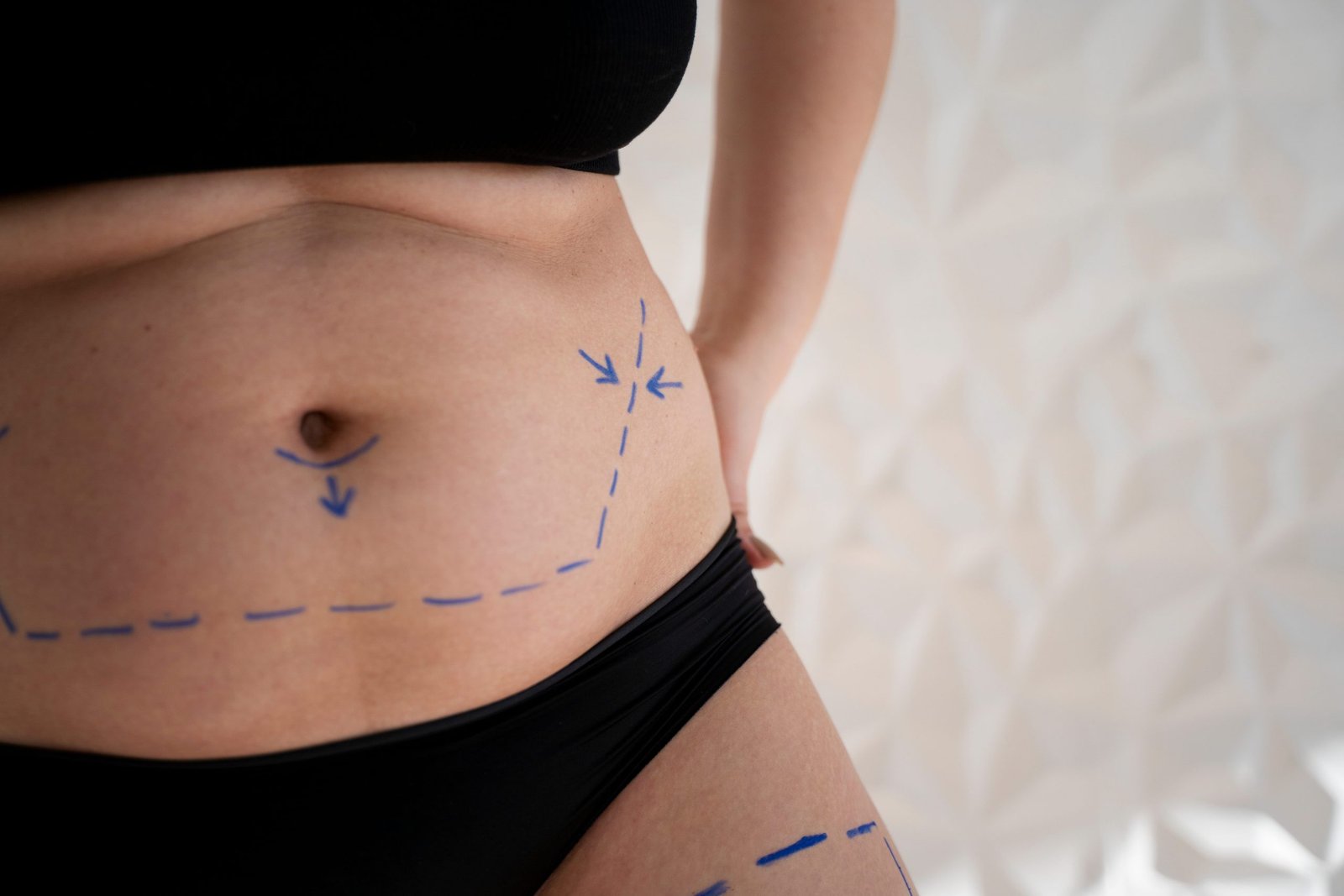
- A diagnostic consultation before any surgical decision
- Complete pre-operative workup (labs, imaging, anaesthesia consult)
- Post-operative follow-up and rehabilitation inside the clinic
What surgical procedures does Sira Clinics offer?
The plastic and bariatric surgery department at Sira Clinics in Madinaty provides: body contouring and liposuction, double chin (submental) correction, hair transplantation using FUE and DHI techniques, rhinoplasty, and bariatric surgery including sleeve gastrectomy. Every case begins with a diagnostic consultation and a complete pre-operative assessment, and ends with a structured follow-up and rehabilitation programme.
The 3 Topics Our Visitors Search Most
1. Body contouring vs. liposuction — what’s the difference, and are you a candidate?
Many people use the terms interchangeably. The difference is the difference between removing and shaping.
- Conventional liposuction reduces the volume of fat in a region — abdomen, flanks, arms. The goal: less volume.
- Body contouring (high-definition sculpting) reveals the natural anatomy beneath the fat: the waistline, abdominal definition, the flow of the back and flanks. The goal: a better shape, not simply a smaller one.
Who is a good candidate?
- A weight at or moderately above your ideal — surgery is not a substitute for weight loss.
- Stubborn localized fat that resists diet and exercise.
- Reasonable skin elasticity. Significantly lax skin may need a surgical lift alongside liposuction.
- Stable general health and realistic expectations.
Who isn’t? Anyone seeking weight loss (that’s bariatric surgery or a nutrition plan), anyone whose health is unstable, and anyone expecting to match a photograph on Instagram.
Recovery: a compression garment for 4 to 6 weeks, return to desk work usually within 5 to 10 days, and light exercise after 3 to 4 weeks. The final shape settles over 3 to 6 months once swelling has fully resolved.
Double chin correction: a much smaller procedure, usually performed with fine-cannula liposuction under local or light sedation, and it makes a striking difference to the jaw angle and profile. Recovery is short, and it suits people with submental fullness despite a normal weight. In some cases non-surgical options are sufficient — and we’ll tell you if yours is one of them.
2. Hair transplantation — FUE or DHI, and how many grafts do you really need?
The difference, practically:
- FUE: follicles are extracted from the donor area, then channels are opened in the recipient area and the grafts placed. Flexible, well-suited to larger areas, and usually lower in cost.
- DHI: the follicle is implanted directly with a specialized pen, without pre-opening channels. It allows finer control of angle, direction, and density, suits hairline design and moderate areas, takes longer, and usually costs more.
No technique is universally “better.” The right one depends on the area of loss, your donor density, and your hair characteristics.
How many grafts? That number cannot be estimated from a photo on WhatsApp. It’s determined after examining the scalp and measuring donor density. As a rough general guide: mild hairline recession may need 1,500–2,500 grafts; moderate frontal and crown loss 3,000–4,000; and extensive loss may require more than one session.
The truth you must know: the donor area is finite and does not regenerate. Anyone promising ten thousand grafts in a single session is spending your entire reserve at once — and there may be nothing left if you need a second session years later.
Before surgery: we run bloodwork (CBC, vitamin D, iron and ferritin, thyroid function) because a great deal of hair loss is purely medical — and treating it pharmacologically is cheaper and more effective than transplanting hair that would have returned on its own.
Result and timeline: transplanted hair sheds within weeks (this is normal and expected), then genuine growth begins from month three to four. The near-final result appears between months eight and twelve.
3. Sleeve gastrectomy — who is a candidate, and what happens afterwards?
Sleeve gastrectomy removes roughly 75–80% of the stomach, leaving a tube-shaped remnant. Its effect is twofold: a smaller volume that produces early satiety, and a genuine hormonal change — ghrelin, the hormone driving hunger, drops substantially.
Who is a candidate? Surgery is generally considered at a BMI of 40 or above, or 35 and above with a comorbidity such as type 2 diabetes, hypertension, or obstructive sleep apnoea — after serious attempts at conservative weight loss have failed. The final decision is a purely medical one following full assessment.
Pre-operative workup at Sira Clinics: comprehensive labs, upper endoscopy, cardiac and respiratory assessment, anaesthesia consultation, nutritional assessment, and psychological evaluation where indicated. These are not box-ticking exercises — they are what separates a safe operation from a risky one.
After surgery: a hospital stay of one to two nights, then a staged diet — clear fluids, full fluids, puréed, soft, then regular food — over roughly six weeks under a dietitian’s supervision.
A lifelong commitment: permanent vitamin and mineral supplementation (B12, iron, calcium, vitamin D), periodic bloodwork, adequate daily protein, and regular physical activity. The sleeve is a tool, not a cure. Anyone who returns to old habits will regain part of the weight, and that isn’t the operation’s fault.
Expected outcome: typically 60% to 70% of excess weight lost over 12 to 18 months, with marked improvement — and sometimes full remission — in type 2 diabetes, hypertension, and sleep apnoea.
Full Department Services
- Body contouring and liposuction — abdomen, waist, back, flanks, arms, and thighs.
- Double chin (submental) correction — jawline definition and profile improvement.
- Hair transplantation — FUE and DHI for scalp, beard, moustache, and eyebrows.
- Rhinoplasty — correcting shape and breathing function together. We treat the nose as a functional organ first and an aesthetic feature second; a beautiful nose that can’t breathe is a failed operation.
- Bariatric surgery — sleeve gastrectomy and alternatives discussed case by case.
- Post-weight-loss body lifting — abdominoplasty and arm lift for patients who have lost significant weight.
Why Choose Sira Clinics for Your Surgery
- A consultation that may end in “no.” What we’re proudest of is turning patients away from operations they don’t need. The right surgery starts with an honest decision.
- A pre-operative workup we never shorten. Labs, imaging, and the anaesthesia consult are completed in full — inside the clinic itself, with no running between centers.
- A complete team around the surgeon. Consultant anaesthetist, trained nursing staff, dietitian, and physiotherapist — because surgical outcomes are built in preparation and recovery as much as in theatre.
- Post-operative follow-up in-house. Follow-up visits, rehabilitation, and home nursing where needed — uninterrupted after you leave hospital.
- Total clarity on risk and cost. Before you sign you’ll know: what could happen, the likelihood of complications, the all-in cost, and precisely what the price does and does not include.
- Standardized photographic documentation. Before-and-after images at identical angle, lighting, and distance, so the comparison is honest — for you and for us.
FAQs
Q: How do I know if I’m a candidate for surgery? A: That can’t be determined from a photo or a phone call. It requires a diagnostic consultation including a clinical examination and review of your medical history. At the end, you’ll have a clear answer: yes and why, or no and what the alternative is.
Q: Is surgery performed at the clinic or a hospital? A: Minor procedures are performed at the clinic under local anaesthesia or light sedation. Major surgery is performed at [contracted hospital name], equipped with operating theatres and intensive care, with the same surgical team.
Q: How long is recovery? A: It varies widely: one day for procedures like double chin correction, 5–10 days before returning to work after body contouring, and around two weeks for bariatric surgery. You’ll receive a written recovery timeline with dates at your consultation.
Q: Will there be pain afterwards? A: There is expected pain, controlled by a pre-planned analgesia programme. Most patients describe the first three days as the hardest, after which things improve quickly.
Q: Are hair transplant results permanent? A: Transplanted follicles are taken from areas genetically resistant to loss, so they generally persist. However, the surrounding native hair may continue to thin, which is why a medical maintenance plan is often needed.
Q: Will I regain weight after a sleeve? A: The operation gives you a powerful 12 to 18-month window. Maintaining the result depends on lifestyle change and consistent nutritional follow-up — which is why every sleeve patient is enrolled in a nutrition follow-up programme.Q: What does surgery cost? A: Cost depends on the procedure, its duration, the type of anaesthesia, and length of stay. We provide a comprehensive written quotation after your consultation, clearly stating inclusions and exclusions.
Book a Consultation
Consult with one of our specialists about the topics discussed in this article.
📅 Book Now